

Hotel technology can make a guest’s arrival feel effortless. Behind that experience, somebody still has to order the supplies, approve the purchase and establish whether the delivery matched the invoice.
The towels have not developed the ability to organize themselves. An inconsiderate omission from modern innovation.
Refresh Miami’s October 27, 2026 profile of Miami-based Reeco puts that operating work in the local technology conversation.1 The report describes its purchasing and payments platform as serving nearly 1,000 hotels across North America, and discusses an AI-assisted cart that suggests orders from inventory and operating needs.
Those are the reported company facts. The broader systems question is how a purchasing workflow carries a request all the way into an accurate operational and financial record.
Start with the purchase the hotel actually needs
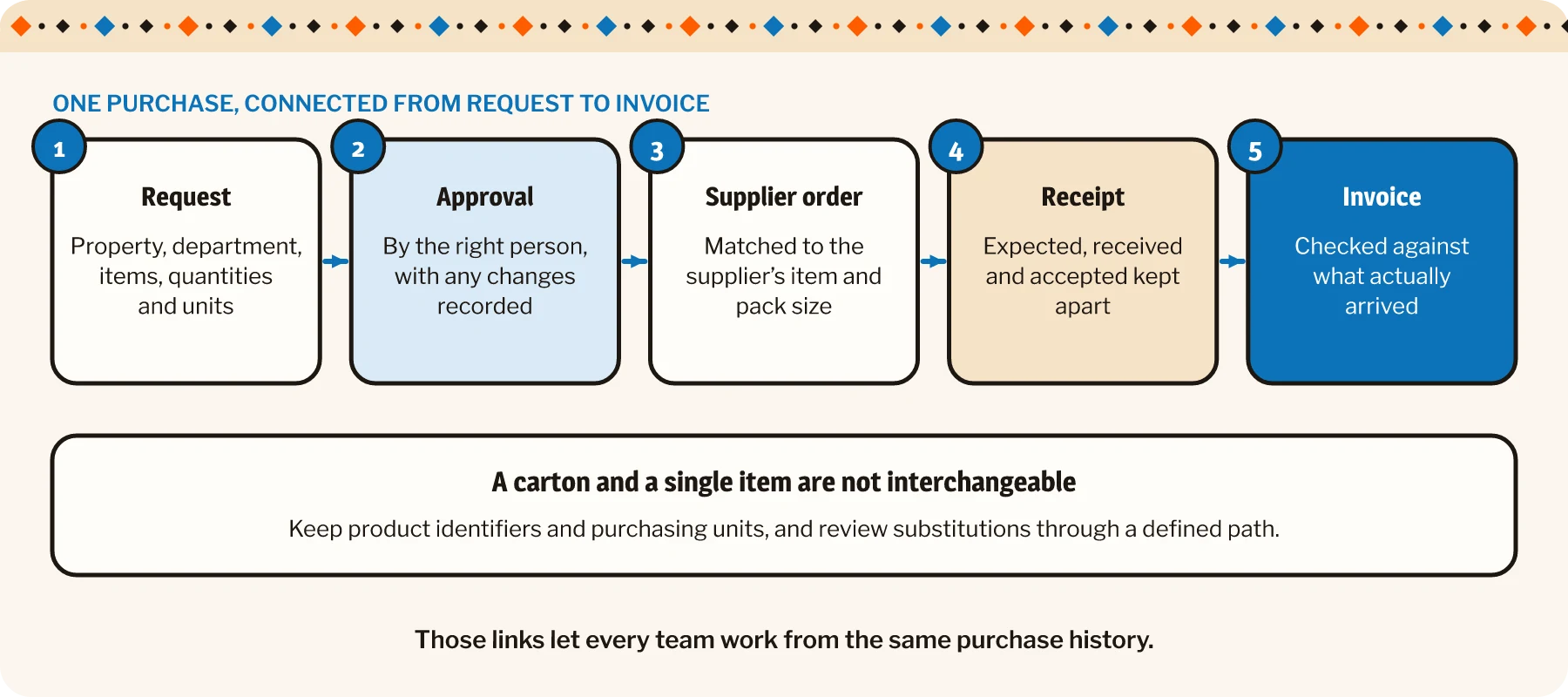
Consider a hypothetical hotel ordering housekeeping supplies. A request begins with a department, a property and a specific need. That context should remain attached as the request moves forward.
Keep item and supplier information consistent
A supplier’s product description may differ from the hotel’s internal name. Pack sizes, units and approved alternatives also matter.
The system needs a reliable way to connect the requested item to the appropriate supplier record. A carton and an individual item should not become interchangeable because both appear beside a reassuring product photograph.
Maintain the relevant product identifiers and purchasing units. When the supplier changes a pack size or an item becomes unavailable, the substitution needs a defined review path.
Make the request and approval stages distinct
A suggested order is a proposal. An approved purchase is a business decision. A supplier acknowledgment provides another piece of information.
The workflow should make those stages understandable and apply the right permissions at each step. Approval rules may vary by property, department or order characteristics, according to the hotel’s actual policy.
This is the kind of problem our custom development team enjoys.
For each purchase, keep a clear connection between:
- The originating property and department.
- The requested items, quantities and units.
- The approval and any subsequent changes.
- The supplier order and acknowledgment.
- The receipt and related invoice.
Those links make it easier for different teams to work from the same purchase history.
Design for the delivery that differs from the plan
A purchasing system earns much of its usefulness after the order leaves the hotel.
Record what arrived, including the exceptions
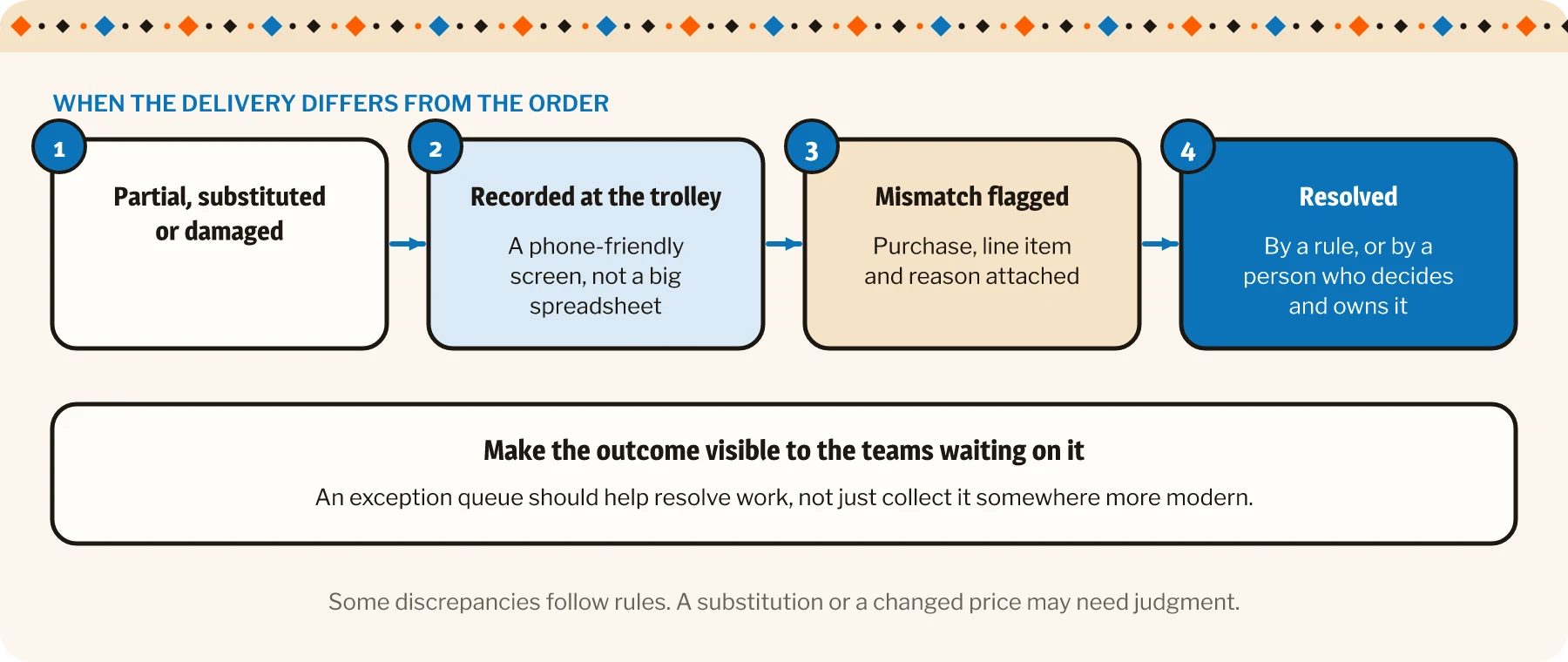
The delivery may be partial, substituted or damaged. Staff need a convenient way to record what was received and what remains unresolved.
That information should reach the people reviewing the invoice. The original order alone cannot prove that every item arrived as requested.
Preserve the distinction between expected, received and accepted quantities where the workflow requires it. A correction should have an understandable history, with an owner for any follow-up.
This is also where practical interface design matters. The person receiving goods may be working away from a desk. A screen designed around a large spreadsheet can be less comfortable beside a delivery trolley.
Route discrepancies to a person who can resolve them
An invoice mismatch should identify the relevant purchase, line item and reason for review. The next person needs enough context to act without searching through several inboxes.
Some discrepancies can follow defined rules. Others need judgment, such as whether a substitution is acceptable or a changed price should be queried.
Keep those decisions explicit and make their outcome visible to the teams waiting on them. An exception queue is useful when it helps resolve work, rather than merely collecting it in a more modern-looking location.
Let AI assist within the operating process
An AI-generated replenishment suggestion can be useful when it draws on appropriate inventory and demand information. The suggestion still needs to fit the purchasing policy and the quality of the underlying records.
Pairs well with Hospitality automation needs to survive a busy Friday night.
Reeco’s reported direction is one example of that opportunity. It does not establish that every hotel should allow software to place orders without review.
For a proposed implementation, I would define which recommendations need approval, which changes require renewed review and how uncertain information is presented. The application should enforce those boundaries independently of the model.
| Treat it as | The application enforces | |
|---|---|---|
| A replenishment suggestion | A proposal drawn from inventory and demand data | Approval according to the hotel’s purchasing policy |
| A change after approval | Something that needs a fresh look | Renewed review before the order moves on |
| Uncertain information | A question, not a guess | Clear presentation of what is unknown |
Then test the complete purchase journey, including a repeated submission, a partial delivery and a mismatched invoice. Check whether the records remain connected and whether each team can identify its next action.
A sensible first project might focus on one department or purchasing category. That gives the team a manageable way to establish reliable data and useful operating habits before expanding.
The guest may never see the purchasing screen. They still experience the outcome when the right supplies are available and the staff can concentrate on hospitality.
Good software behind the scenes deserves attention for that reason. The room key can remain impressively digital. The towels can continue being pleasantly ordinary.