

Finding tonight’s poker game is a useful job for a website. Giving players a reason to stay connected after the game is a larger one.
That shift sits at the heart of our work with Rock ‘n Roll Poker League, or RnR. The project grew from a simple informational website into a purpose-built platform, with the Zulu Shack team developing the custom .NET experience behind it.
The interesting part is the change in purpose. A league has venues and events, but it also has returning players, results, seasons and relationships. A platform needs to make those things understandable together.
The custom platform launched in 2025. This part of the story concerns that foundation. The deeper XP and badge work belongs to the later development phases, rather than being folded backward into the first release.
Begin with the player journey
The question was bigger than which features could fit on the homepage. What does someone need before their first game, after they have played and when they return during the season?
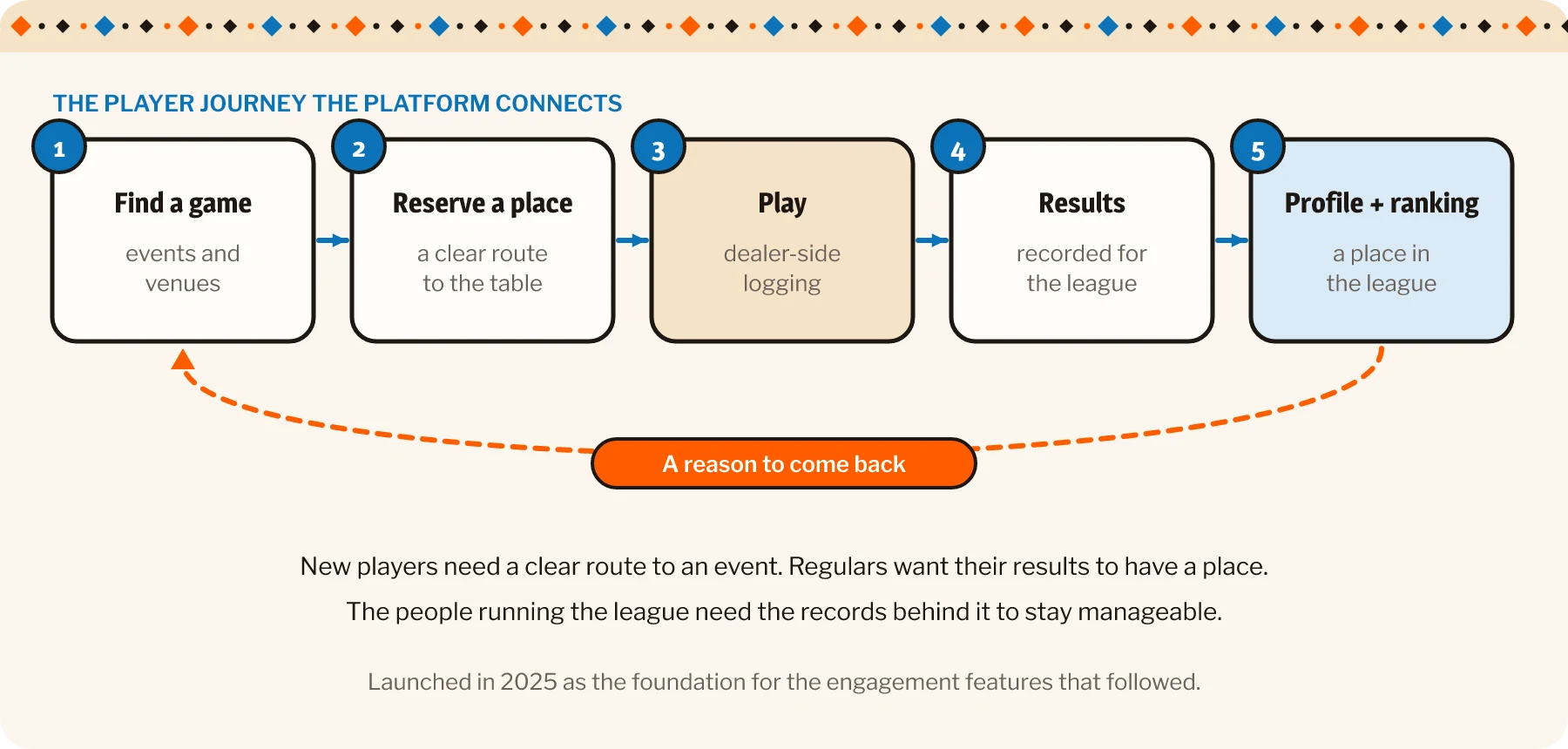
A new player needs a clear route to an event. An established player wants their participation and results to have a place. The people operating the league need the records behind that experience to remain manageable.
The initial custom platform connected event discovery and reservations with player profiles, results and rankings. Dealer-side logging was part of the operating picture. That gave the project a basis for serving both the player-facing experience and the work behind it.
It is easy to make a feature list sound inevitable after the fact. The more useful design discipline is asking which part of the journey each feature is meant to support.
Rock ’n Roll Poker League is one of our favourite gamified builds. See how the Octalysis framework shaped its custom .NET platform.
A player profile can give someone a recognizable place in the league. A ranking can make the current competition visible. An event listing helps with the practical business of turning up somewhere that actually has a poker table. We should probably get that part right before commissioning the celebratory animation.
Use motivation as a design lens
Yu-kai Chou’s Octalysis framework helped frame the engagement direction: development and accomplishment, ownership, social connection and curiosity.1
Those ideas do not prescribe a particular points schedule. They provide questions to bring to the design.
Can someone recognize their progress? Does their profile feel connected to their participation? Is there a reason to notice other players and upcoming events? What remains interesting after the first visit?
For RnR, that thinking matters because the community exists at the table as well as on the screen. The platform should support that relationship, rather than manufacture a separate activity that asks players to stop enjoying the league and start servicing the software.
Next in the series: RnR, part 2: Give players a reason to return, then choose the mechanic.
Give the foundation room to develop
Moving into a custom application made the league’s own workflows central to the product. It also created an ongoing responsibility to maintain the application and develop it in coherent phases.
That is why it is useful to distinguish the operating foundation from later engagement mechanics. Event records, player identity and results need a clear meaning before a reward system can sensibly build on them.
The work is a team effort. Design, development and the league’s operating knowledge all contribute to whether the finished experience makes sense.
There is no growth percentage to attach to this story here. The practical change is visible in the product’s purpose: a simple site that informed people became a custom platform designed around participation.
That is the part I find most interesting. The website can help people find a game, recognize their place in the league and pick up the thread when they return. The cards still provide plenty of uncertainty. The software can afford to be a little more helpful.