The purpose of this document is to serve as an internal best practices guide to use when developing a topical content map for a website. This is best implemented right after you have worked with a website designer to create a new site and also best used in tandem with SEO services and
Specifically, this guide is meant to be a resource for how to develop, structure, and find topics for a topical content map. This can include both blogging content, as well as static (i.e. ‘evergreen’) pages on a domain. It outlines SEO and content creation best practices so that our clients can maximize the traffic and ROI from their blog content creation efforts.
The guide is split into three main sections:
- Topical Content Map Overview: What is a topical content map, how are they structured, why are they important, and how will we use them?
- Audience Targeting: Best practices for how to conduct proper audience targeting, background research, keyword mapping, and competitor research.
- Keyword Targeting:Creating topics, SEO minion, grouping similar topics and keywords
Step #1 – Topical Content Map Overview
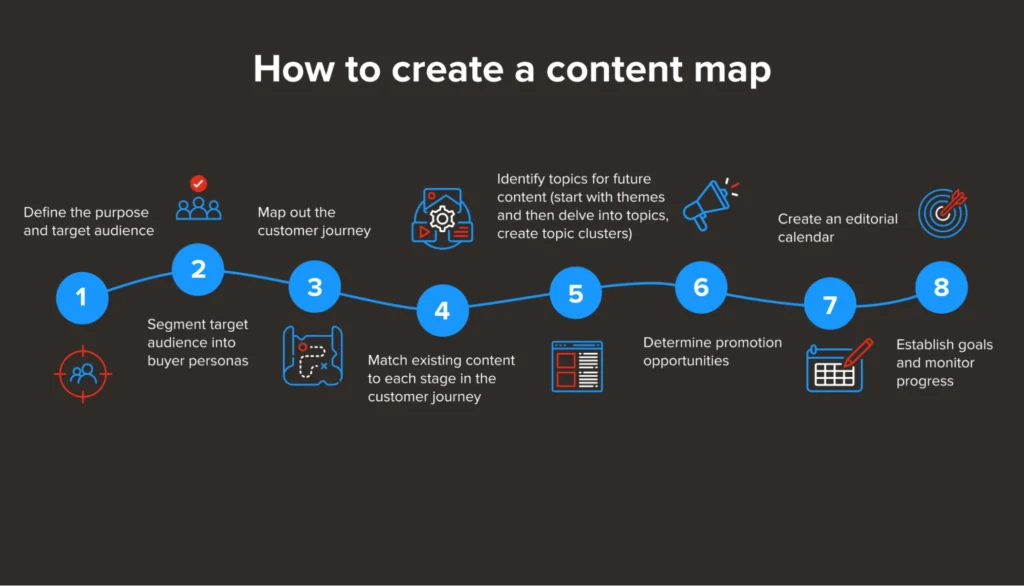
This section contains best practices for how to topical content map but first we must learn what a topical content map is, how it works, what it’s important and how we use it.
Here is an example of a Topical Map Sample / Niche: Solar Energy.
What is a Topical Content Map?
A topical content map is a listed representation or outline of the main topic categories, pages in that category, and their relationships within a particular keyword.
How Do You Create a Topical Content Map?
To create a topical map for a website, you must organize the content of your website into a hierarchy of categories and sub-topics, with each page focusing on a specific topic related to a keyword.
What’s the Purpose of a Topical Content Map?
The purpose of a topical content map is to provide a high-level overview of the topic we want to cover, identify key themes or categories, and show how different topics are interconnected using keywords.
Want this handled for you? See our SEO services.
Why is it Important?
When we cover more topics, we get more traffic and Google will trust us more as well. It’s a feedback cycle. It also helps to organize and structure information, making it easier to create new SEO content that covers all potential questions about the services or products offered by a client.
Step #2 – Audience Targeting

This section contains best practices for how to conduct proper audience targeting, background research, and keyword mapping prior to writing a piece of content.
Topic Selection
The first step phase of any good topical content map development is to choose the overall topic and angle which is to be developed for the post. A general guideline for this is to always be audience focused first.
A few helpful questions to ask yourself to this effect are:
- What does my audience care about?
- What does my audience uniquely care about for the given topic?
- What would be the most useful, informative, and/or interesting piece of content I can produce for my audience?
Here are a few places to find topics:
- Google the keyword we want to rank for and click on the “More People Asked” section
- SEO Minion can crawl that section
- Competitor Website
- Just do some clicking around and also look at other blogs
- Using Ahrefs to find their top pages
- Check the competitor’s sitemap www.example.com/sitemap.xml
- Other tools
Outline based on Competitor: To find this, google the primary keyword and choose the top 3 ranking, use SEO Minion (or do it by hand) to extract all the headers. Sort them and remove duplicates.
Bottom Line: The type of content that is best for your users is almost always best for SEO purposes. “Focus on the user and all else will follow.”
Step #3 Keyword Targeting
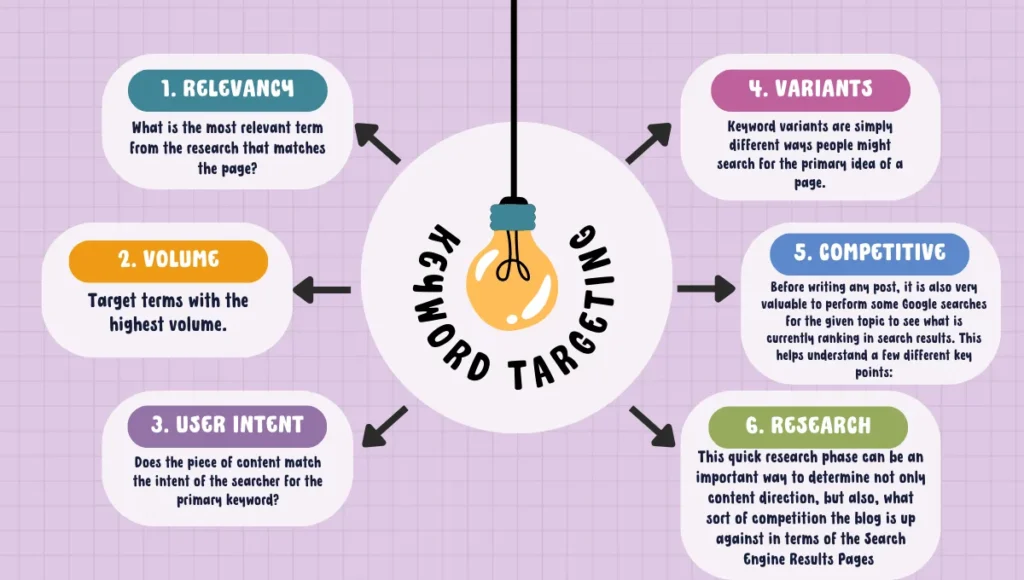
Once the content type and direction have been determined, it is now important to think about the organic keywords for which we would like the page to rank. This is important because we want our content to be targeted against the actual queries users are looking for.
This keyword targeting can be broken up into two sections:
Primary Keyword: For written content, each page ought to have a single, highly valuable keyword for which it is trying to win. In other words, this is the #1 keyword you would like to win given not only its relevance to the page, but also, its opportunity (i.e. how many people search for it each month).
Choosing the right primary is the best way to ensure a page is highly targeted. Additionally, it helps inform all future optimization work. I.e. The goal is to optimize each page against the primary keyword.
Related read: Storytelling That Sells: The Power of Content Writing For Marketing.
What to Focus on for a Primary Keyword:
- Relevancy: What is the most relevant term from the research that matches the page?
- Volume: Target terms with the highest volume.
- User Intent: Does the piece of content match the intent of the searcher for the primary keyword?
Keyword Variants: Keyword variants are simply different ways people might search for the primary idea of a page. Keyword variations are important to include on the page because they cover the wide range of different ways people might search for something. It also helps break up repetition on the page so you are not using the primary keyword over and over again.
What to Focus on for Keyword Variations:
- Simple variations of the primary keyword.
- Still central to the primary targeting of the page.
- Would make sense to a user, given the content of a page.
- Every page ought to have 2-4 keyword variations assigned to it.
Competitive / SERP Research
Before writing any post, it is also very valuable to perform some Google searches for the given topic to see what is currently ranking in search results. This helps understand a few different key points:
- The type of content currently in existence for a given query. i.e. What sort of websites and web pages are currently ranking?
- The quality of content that Google has determined deserves a top 10 result. i.e. What is the standard of quality which it will take to achieve a top 10 result?
- The sort of content users seem to care about. i.e. What are the most useful content pieces you see in the SERPs?
- Check their sitemap and steal all the topics from there as well!
This quick research phase can be an important way to determine not only content direction, but also, what sort of competition the blog is up against in terms of the Search Engine Results Pages (SERPs). Understanding both of these things can be invaluable prior to actually developing the piece.
Keep in mind that in order to rank a piece of content into one of the top positions organically, it must be at least as useful, high quality, and interesting as the pieces currently occupying the top organic positions.