

A progress indicator says an AI task is 60% complete.
Sixty percent of what?
It might mean the system has inspected six of ten documents. It might mean it has finished the easy part and is about to discover that the remaining documents disagree. A cheerful bar can carry quite a lot of ambiguity.
For long-running AI work, useful progress should explain what has been completed, what has been checked and what needs to happen next. That helps both the software and the person supervising it make a sensible decision.
Anthropic’s March 2026 work on long-running application-development harnesses explores structured handoffs and evaluation alongside generation.1 The practical lesson I would carry into a business workflow is that progress needs evidence and a next action, including a route for human intervention.
Picture a task that pauses halfway
Consider a hypothetical agent comparing supplier proposals against an agreed equipment specification. It has reviewed several documents and extracted the relevant details.
One proposal uses an unfamiliar product code. Another omits an important requirement. The agent can continue writing a comparison, but the unresolved questions affect whether that comparison is useful.
The interface should make those questions visible while preserving the work already done.
Give the halfway point a useful shape
For each proposal, record which version was reviewed, which requirements were matched and which findings need confirmation. Link the findings to the relevant source material so a person can inspect them.
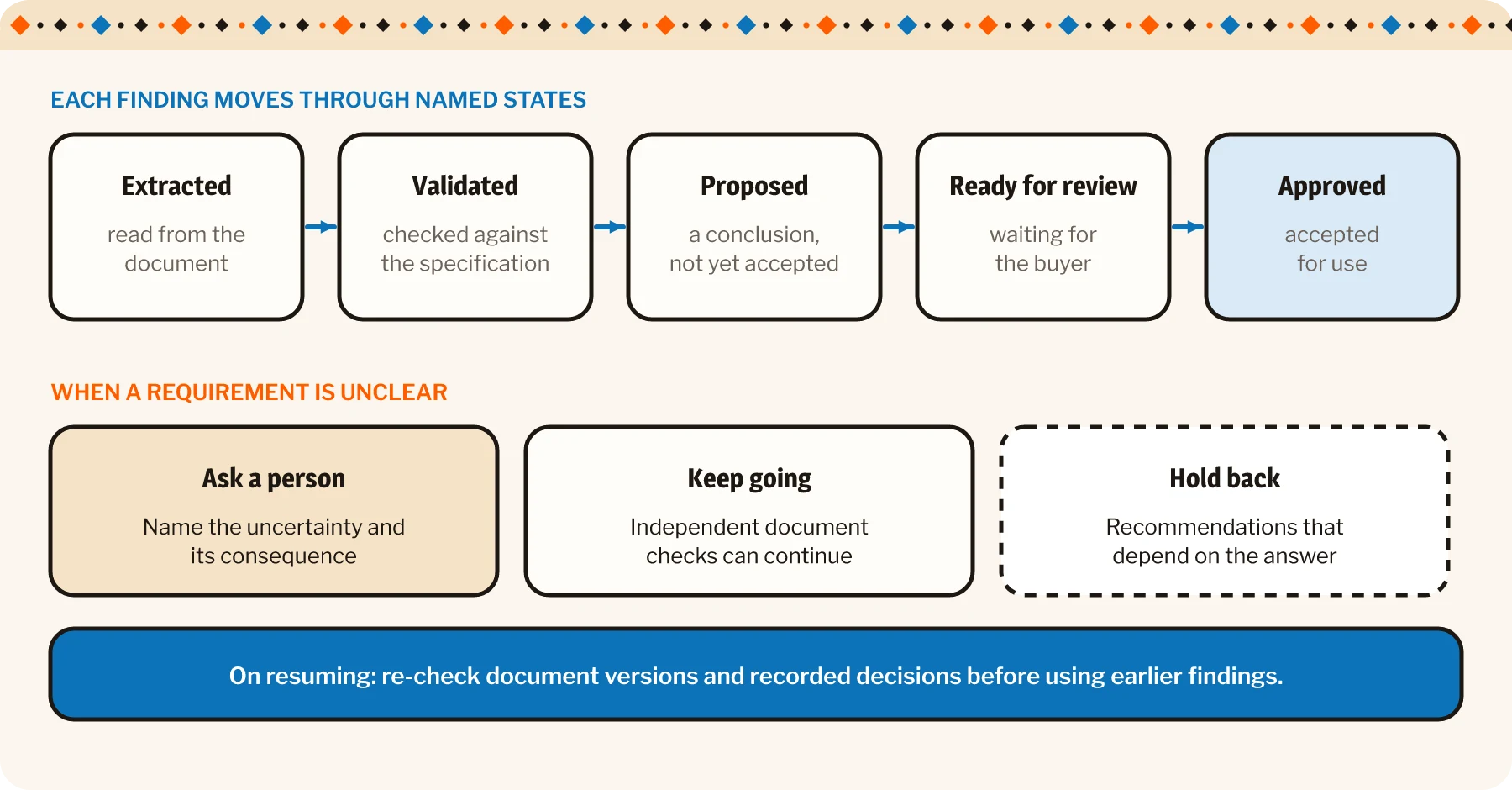
Then distinguish the stages. Information extracted from a document has not necessarily been validated. A proposed conclusion has not necessarily been accepted. A comparison ready for review should not look the same as one approved for use.
We build AI agents with clear jobs and sensible limits. See how.
Those states make the next action clearer. The agent might continue with another proposal, retry a failed document read or pause for a person to clarify an ambiguous requirement.
Ask for help in a way people can answer
A useful intervention request names the uncertainty and explains its consequence. “This product code does not match the approved specification; please confirm whether it is an acceptable alternative” gives someone a decision they can make.
“Something went wrong” mostly gives them a new hobby.
The person should be able to answer without reconstructing the whole task. Show the relevant evidence, available choices and effect of the decision. Record the response so the next session can use it consistently.
Also decide what the agent may continue doing while it waits. Independent document checks might proceed. A recommendation that depends on the unresolved specification should remain pending.
Check out this blog: Does this workflow need an AI agent, or a decent set of rules?
Plan the return as well as the pause
This arrangement needs a recovery path. When the task resumes, it should verify the current document versions and recorded decisions before using earlier findings. A supplier may have submitted a revised proposal while the agent was paused.
The final completion check should cover the intended scope and unresolved items. It may be perfectly acceptable to finish with a comparison that clearly identifies questions requiring a buyer’s judgment. That is different from quietly filling the gaps.
I would test the halfway state as deliberately as the finished report. Interrupt the task, supply a clarification and replace one source document. Observe whether the system updates the affected findings and explains what remains.
A good long-running workflow should be understandable before it is finished. People can see the useful work, make the decisions only they can make and trust that the system knows where to continue.
The progress bar can stay. It just needs a little more to talk about.