
In digital marketing, new terms like Generative Engine Optimization (GEO), AI Optimization (AIO) and AI Search are getting attention. These buzzwords promise to redefine how businesses achieve visibility on AI search platforms, such as Google’s Gemini, ChatGPT, or Perplexity. They suggest a big shift in search engine optimization, urging companies to adopt specialized strategies to stay competitive.
However, at Zulu Shack Creative, we believe the hype surrounding GEO and AIO is largely overstated. The core principles of SEO, which include creating high-quality content, optimizing technical performance, and building authority, remain as effective today as they were over a decade ago. In this article, we’ll unpack why these trendy labels are merely repackaged SEO and how focusing on proven strategies ensures sustainable success in 2025 and beyond.
Is AI Search Taking Over Search in 2026?
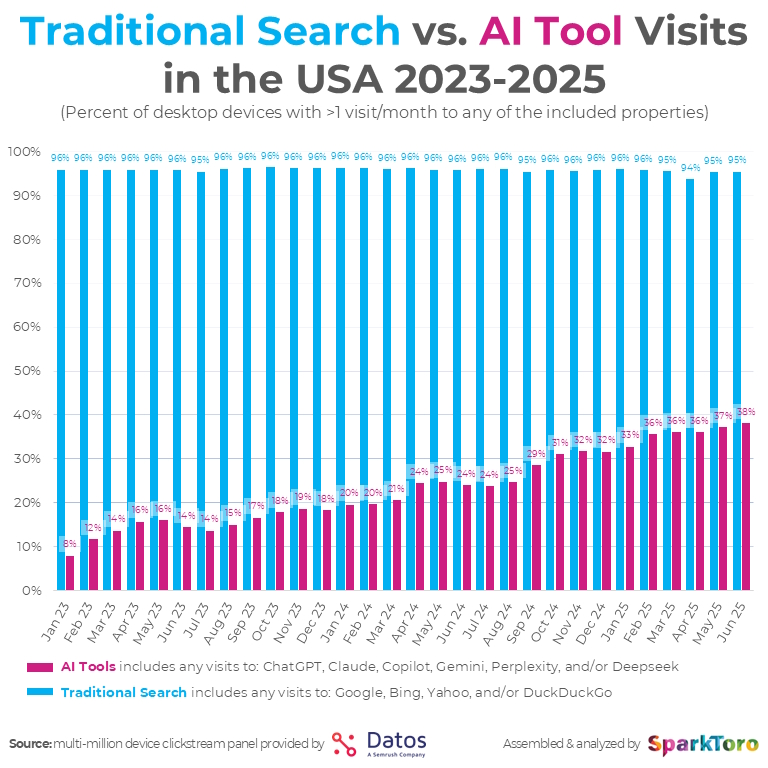
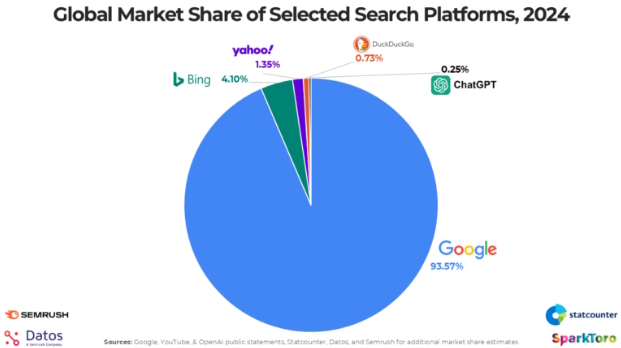
ChatGPT (and other AI search platforms) use is growing, but new user adoption has also slowed down tremendously over the past 12 months. Google’s search market share has remained stable for the last decade, despite what you may have heard on LinkedIn.
Google still gets roughly ~373 times as many searches as ChatGPT based on 2024 data. To put it in perspective, for every 37.5 million search-like chats that happen on ChatGPT, Google handles 14 billion searches.
The Origins of Modern SEO: A Look Back
To understand why GEO and AIO don’t represent a revolution, it’s worth revisiting a pivotal moment in search history: Google’s Hummingbird update in 2013. This update marked a turning point by introducing semantic search, enabling Google to interpret the intent behind user queries rather than relying solely on exact keyword matches. For example, a search for “best Italian restaurant nearby” began delivering results based on context, location, and relevance, powered by natural language processing (NLP). This technology is a precursor to today’s large language models (LLMs).
Hummingbird also introduced features like the Knowledge Graph and autocomplete, which laid the groundwork for the AI search experiences we see today. These advancements shifted SEO’s focus from keyword stuffing to creating content that genuinely serves users. Fast-forward to 2025, and AI-generated search results, including Google’s AI Overviews or ChatGPT’s conversational responses, build on the same principles: delivering accurate, authoritative, and user-focused information. GEO and AIO may sound cutting-edge, but they’re rooted in the same SEO fundamentals established years ago.
Search Intent Still Matters in AI Search
Search intent remains one of the most important factors to consider when doing SEO. The main types of search intent are transactional (users looking to buy), informational (users looking for information on something), and commercial (users doing research because they want to buy a product or service).

Most searches on ChatGPT have informational intent. 95% of ChatGPT users still use Google, while only 14.3% of Google users also visit ChatGPT. What this means is that someone might ask for information regarding a product or service on ChatGPT, but that user will then head to Google when they are ready to do their transactional search.
Decoding GEO and AIO: What’s Really New?
The terms GEO and AIO have emerged as marketing agencies attempt to differentiate their services in a crowded digital landscape. GEO, for instance, claims to optimize content specifically for generative AI search platforms that produce synthesized answers rather than traditional search result lists. AIO, similarly, suggests tailored strategies for AI search platforms. But when you peel back the layers, these approaches rely on the same tactics SEO professionals have used for years.
Let’s be clear: Search hasn’t changed. How Google displays search results has changed. Google will keep changing how it displays search results in the future.
For example, when Google’s AI Overview generates a summary for a query like “how to improve website traffic,” it pulls from top-ranking pages optimized with standard SEO techniques: targeted keywords, clear formatting, and authoritative backlinks. Similarly, ChatGPT’s responses often cite or paraphrase high-quality sources that rank well in traditional search. The processes may differ (retrieval versus generation), but the inputs that drive success remain consistent.
We’ve seen agencies pivot from ‘social media’ to ‘content marketing’ to ‘growth hacking.’ GEO and AIO are just the 2025 version of that. It’s new paint on an old house. Clients get results from a strong foundation, not from chasing the latest acronym. We focus on the foundation.
Ryan Kemp
Co-Founder at Zulu Shack Creative
The Pitfalls of Chasing Buzzwords
The allure of GEO and AIO lies in their promise of future-proofing your digital presence, but falling for the hype can lead to costly missteps. Many agencies use these terms to capitalize on businesses’ fears of being left behind in an AI search world. The result is that companies invest in expensive, “specialized” services that deliver little more than standard SEO practices wrapped in trendy jargon.
Consider a practical example: a business owner hears that GEO is essential for ranking on AI search platforms. They hire an agency promising GEO expertise, only to receive a strategy centered on keyword optimization, link building, and site speed improvements. These are core SEO tactics that they could have implemented at a lower cost. Worse, focusing on buzzwords can distract from addressing real gaps in a website’s performance, such as outdated content or poor mobile usability.
The rapid evolution of AI technology means that chasing trends is a losing game. Algorithms change frequently, but the principles of delivering value to users through relevant content, technical excellence, and trustworthiness endure. By prioritizing these fundamentals, businesses can adapt to any search environment without wasting resources on fleeting fads.
The Pillars of Effective SEO in 2025
To achieve and maintain visibility, whether on traditional search engines or AI search platforms, focus on these time-tested strategies:
- Craft Intent-Driven Content
Content remains the heart of SEO. Write articles, guides, and product pages that directly answer your audience’s questions with clarity and authority. For example, a blog post titled “How to Choose the Best CRM for Small Businesses” should provide actionable advice, backed by data or examples, to address specific pain points. AI engines, like their predecessors, favor content that is concise, well-structured, and rich with relevant information. - Prioritize Technical Optimization
A website that loads slowly, isn’t mobile-friendly, or has broken links will struggle to rank, regardless of the search platform. Invest in technical SEO to ensure your site is accessible and user-friendly. Tools like Google’s PageSpeed Insights can help identify areas for improvement, such as image compression or server response times. A seamless user experience is a universal ranking factor. - Build and Maintain Authority
Earning backlinks from reputable websites signals to search engines and AI models that your content is trustworthy. Strategies like PR link building, guest blogging, industry partnerships, or creating shareable resources (such as infographics or research reports) can boost your authority. For instance, a backlink from a respected industry publication carries more weight than dozens of low-quality links. - Leverage Keyword Research
Understanding what your audience searches for is critical. Use tools like SEMrush or Ahrefs to identify high-value terms with strong search intent. Doing a few Google searches yourself can also help you understand what users are typing into Google. Incorporate these keywords naturally into your content, headers, and meta descriptions to improve discoverability. - Monitor and Adapt
SEO is not a set-it-and-forget-it process. Regularly audit your website’s performance, track keyword rankings, and analyze user behavior to refine your strategy. AI search may evolve, but staying data-driven ensures you can pivot without losing ground.
Why ZuluShack Is Your Trusted SEO Partner
At ZuluShack, we don’t rely on buzzwords to drive results. Our SEO strategies are grounded in data, experience, and a commitment to your success. We offer:
- Customized Content Plans: We create content that resonates with your audience and aligns with their search intent, ensuring maximum relevance.
- Comprehensive Technical Audits: Our audits can identify problem areas on any website. Our team optimizes your website for speed, mobile compatibility, and crawlability, enhancing user and search engine experiences.
- Strategic Authority Building: We secure high-quality backlinks to position your brand as an industry leader.
- Advanced Keyword Strategies: Our research uncovers the terms that drive traffic and conversions for your business.
- Ongoing Performance Tracking: We monitor results and adapt strategies to keep you ahead of the curve.
Embrace What Works, Ignore the Noise
The next time you hear about GEO, AIO, or another flashy acronym, approach it with a critical eye. SEO’s core mission, delivering value to users through relevant, accessible, and trustworthy content, remains unchanged. By focusing on proven strategies, you can achieve sustainable visibility across any search platform, from Google to emerging AI tools. At Zulu Shack Creative, we’re here to help you navigate the digital landscape with clarity and confidence. Ready to elevate your search performance? Contact us today to start building a strategy that delivers lasting results.

My name is Ryan, and I help businesses, small and large, make a lasting impact online.
I am passionate about delivering results and helping my clients succeed. With my expertise in SEO, branding, and marketing, I lead the agency’s efforts to create and implement effective strategies that drive business growth. Our all-inclusive approach sets us apart from other digital media companies and ensures that our clients receive the full range of services they need for online success. If you can think of it, we can build it!
Zulu Shack Creative team members thrive on momentum. Like Zulu warriors, we strive to spearhead your idea with speed and quality.
When I’m not helping my team implement new digital marketing strategies, I enjoy playing music, hosting poker nights, reading Stephen King novels, and spending time with my wife and baby daughter.